Speaking for the Earth and the People- a Look into the advocacy work of Laylalanai Gocobachi
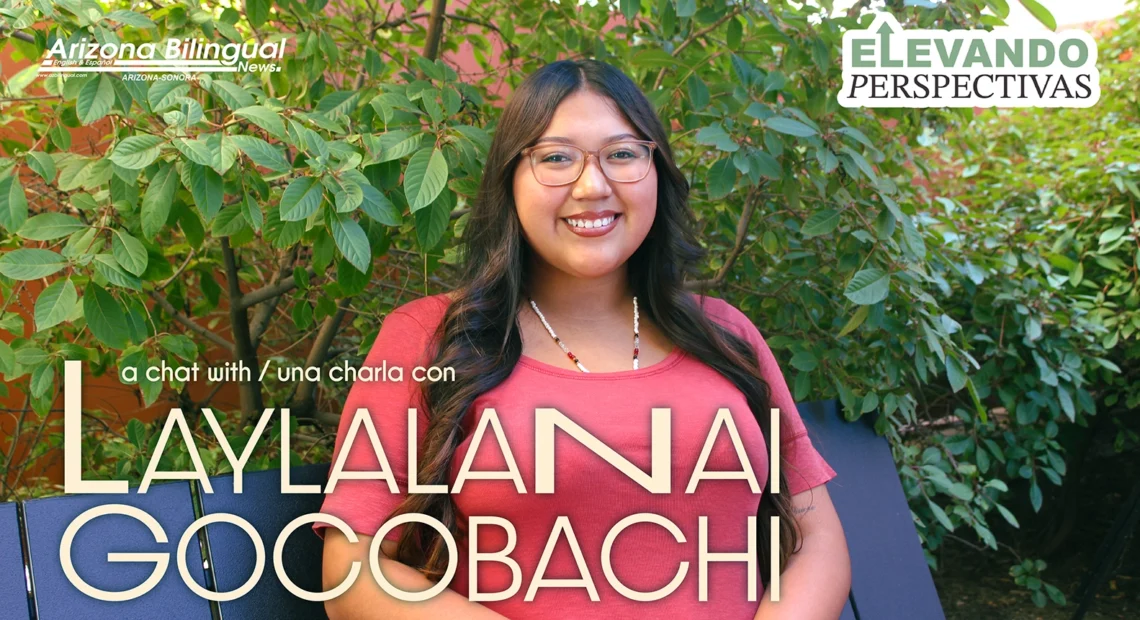
Laylalanai Gocobachi (Yoeme/Mayo) is a community advocate, UofA student, and the 43rd Miss Native UA (the first ever Yaqui woman to hold the title!) Laylalai shares with us the reason behind her work and studies in Environmental Science, how she balances her work/student life, and how she represents her people and ancestors in academia.
Hello! Could you please state your name, your tribal affiliation,and what you do?
Lios enchim aniavu, ketchem allea- my name is Laylalanai Gocobachi, I come from the Pascua Yaqui Tribe and I am currently studying Environmental Science with an emphasis in soil, air, and water.
What got you started in your work and studies pursuing environmental science?
What got me started in my work and studies in pursuing Environmental Science was the community impact. I saw a lot of what was happening in my cultural homelands, and as well as my family members’ influence that led me to pursue this higher education.
I’ve been studying Environmental Science for about 4 years here at the University of Arizona.
How do you, as someone who is a community advocate and a current student, balance your workload in your everyday life?
I balance my school life with my personal life…there is a lot of discipline that is required! I keep reminding myself about the reason why I chose this degree and the support that I have, and that’s what keeps me going (along with the discipline.)
[Following the previous question] What words of advice do you have to other young people who are looking to be more vocal about issues in environmental justice, but don’t feel like they have the time/capacity to do so?
Advice that I would give to other people that are willing to do this type of work is to just get started now. It doesn’t matter if you have only 20 minutes of your day, or if you have little equipment or little resources – get started now and just take those healthy risks. One small step can lead you to so many places you never thought you could get to before.
In a previous interview you’ve done, you’ve said, “You are representing your people in every room you walk in.” How do you live out these words in your day-to-day life, and how do you carry these words into your future?
In a previous interview, I said the words, “You are carrying your ancestors and representing them in every room that you walk into.” By that [there] is a saying that I was taught that means ‘It’s in your hands’. So, with this meaning, I carry it throughout my daily life and I know that every room I walk into, I’m representing my people. Especially in higher education, there are times where I’m the only person of color, the only woman, the only Indigenous woman – but I carry things like my jewelry, my identity and I wear my cultural clothes to presentations, loud and proud, every time. I do things like that to carry my ancestors with me.
We acknowledge and stress the importance that Native voices deserve and need to be heard year-round, and not just the month of November- however, what is the meaning of Native American Heritage Month to you specifically (if any)?
Native American Heritage is such an important time not only to me, but to all our Indigenous communities. We have been through so many trials, and we continue to show up, we continue to be there for our communities, and when we come together especially during this month (and outside of this month) we make sure that our voices are heard and that together we have one powerful voice.